

Fraud prevention
Understanding payments
Read more
What is friendly fraud? Learn why customers dispute legitimate charges, see common friendly fraud examples, and find practical ways to prevent it.
October is Cybersecurity Awareness Month, and most of the advice you’ll see focuses on threats like phishing emails, data breaches, and stolen card numbers. Those risks are real, but one of the fastest-growing types of payment fraud starts with your own customers, not professional criminals.
Friendly fraud happens when a customer disputes a legitimate purchase with their bank instead of coming to you. The sale was real, and the card was theirs, but you still have to return their money. Juniper Research expects global friendly fraud losses to reach nearly $16 billion by 2031, up from an estimated $8.1 billion this year.
For a growing business with tight margins, those losses add up fast. Let’s take a look at what friendly fraud is, what it looks like in practice, and what you can do to lower your risk.
Friendly fraud, also called chargeback fraud or first-party fraud, is when a cardholder disputes a legitimate transaction with their card issuer, usually by claiming they didn’t make the purchase or never received it. Because the dispute goes through the bank, it becomes a chargeback. The funds are pulled from your account, a dispute fee is typically added, and it’s up to you to prove the sale was valid.
Each dispute also counts toward your chargeback ratio, and a ratio that climbs too high can lead to extra fees or put your ability to accept cards at risk. Our guide to chargebacks walks through the full process.
The “friendly” part of the name can be misleading, but it simply means the person disputing the charge is a real customer, not a criminal with a stolen card. Some cases are honest mistakes, and others are deliberate. From the bank’s perspective, the two often look the same, which is why these disputes are so hard to fight.
With true fraud (sometimes called third-party fraud), someone uses stolen card details without the cardholder’s permission. The cardholder is a victim, and so is the business that accepted the payment. With friendly fraud, the cardholder or someone in their household genuinely made the purchase.
That difference matters. Tools like address verification and chip readers are built to catch stolen cards, not a real cardholder using their own card, so prevention depends on clear communication and good records.
Disputing a charge used to mean calling the bank. Today, cardholders can start a dispute in their banking app, an option social media has made more people aware of. Juniper Research points to that awareness, along with a rise in deliberate friendly fraud, as a key reason it expects chargeback requests to climb to 616 million by 2031.
In a Mastercard-sponsored survey of U.S. card issuers and large merchants, 83% of issuers believe chargebacks are rising in part because more customers are learning they can dispute a charge. On the merchant side, 77% said the dispute process is too easy.
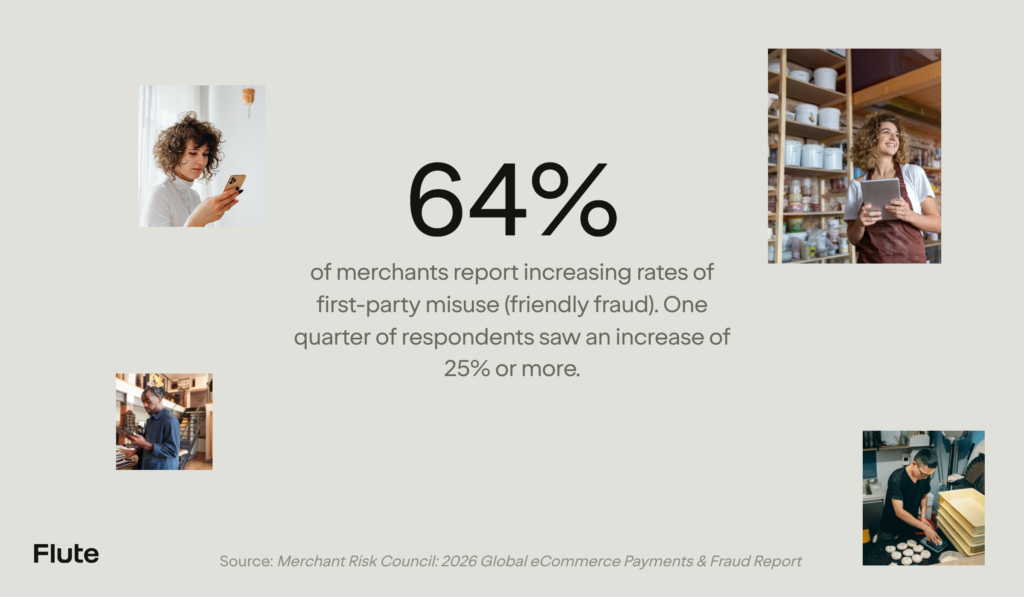
In another survey, 64% of merchants report increasing rates of first-party misuse (the industry’s term for friendly fraud), and one-quarter saw increases of 25% or more.
Attitudes play a role, too. Juniper says one reason friendly fraud is growing is that many consumers view it as a “victimless crime.” Any business owner who has lost a sale and paid a dispute fee knows otherwise.
Friendly fraud tends to follow a familiar pattern. Knowing what to look for can help you spot it (and take steps to prevent it) before your business is exposed.
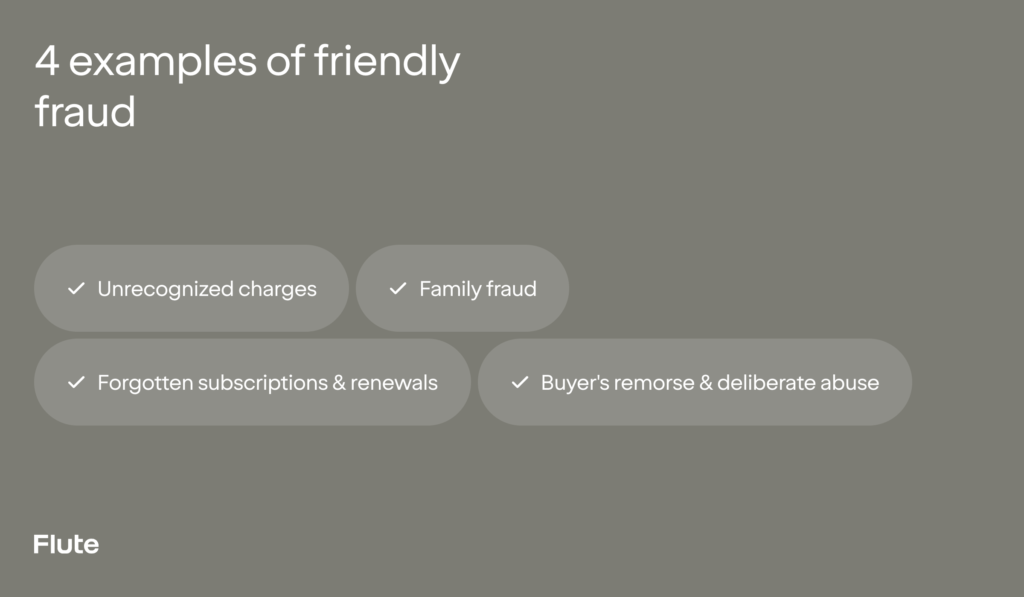
When the name on a statement doesn’t match the business a customer remembers, they might think a real purchase looks suspicious. This often happens with businesses that bill under a parent company or a shortened name.
For instance, if your storefront is called “Katy’s Cakes” but your merchant name appears as “6th Street Bakery Inc.” on their statement, they might not connect the purchase to your business and assume the charge was fraudulent. That’s why it’s so important to make sure the descriptor customers see in their banking app matches your brand name.
Consider a hobby shop that sells collectible model kits online. A 12-year-old finds his mom’s card saved in the family’s web browser and orders a $180 limited-edition set. His mom later spots a charge from a store she’s never heard of and reports it as fraud. The shop did everything right, but it will lose the sale unless it can prove the purchase was legitimate.
Family fraud is especially common anywhere cards are stored on file, like online stores, streaming services, and games.
Say a customer signs up for a local meal prep company’s weekly plan in January, planning to try it for a month. By April, they’ve stopped picking up meals, forgotten they ever signed up, and see a string of charges they don’t remember approving. Rather than calling the business, they dispute all of them.
Some friendly fraud is intentional. A customer might regret an expensive purchase after the return window closes and claim it never arrived, betting the business won’t push back. That bet often pays off, since some merchants choose not to contest chargebacks at all because of the time and cost of building a response.
When you get a dispute, it’s not always clear whether you’re dealing with an honest mistake, real fraud, or friendly fraud. A few patterns can point you in the right direction and help you decide which are worth fighting:
None of these proves bad intent, but they can help you decide which disputes to contest.
Friendly fraud doesn’t have one cause, so it doesn’t have one fix. The most effective prevention goes after the specific ways real customers end up disputing real purchases. For the everyday safeguards every business should have, like a clear billing descriptor and automatic receipts, start with these chargeback prevention basics.
Here are a few more tips to keep in mind.
When a charge looks unfamiliar, most people check their banking app, not their inbox. Card networks now offer tools that show your logo and order details right in that app, which can answer a customer’s question before they file a dispute. Ask your payment provider which of these tools it supports, along with any pre-chargeback alerts for catching disputes early.
Send an order confirmation by email or text the moment a purchase goes through, with the item, amount, and your business name. A parent who sees that message the same day can connect it to their kid’s order right away, instead of spotting an unfamiliar charge weeks later. If you store cards on file, consider requiring a password or security code before a shopper can use a saved card.
Spell out billing terms at signup, send a reminder before each renewal or before a free trial converts to a paid plan, and make canceling simple.
Deliberate disputes often happen when a customer decides the bank will be less hassle than working with you. When an unhappy customer does reach out, refunding them quickly can help you avoid the long dispute process and related fees.
Under Visa’s Compelling Evidence 3.0 rules, you can push back on certain online and phone fraud claims using the customer’s own purchase history. That means if the same card was used for (at least) two earlier purchases from your business that weren’t reported as fraud, those sales can count as evidence. Both need to have happened between 120 and 365 days before the dispute.
Those purchases also need to match the disputed one on at least two of the following details, with one being the IP address or device ID. Here’s what Visa asks for:
Mastercard’s First-Party Trust program works similarly by letting merchants share details like purchase history, device information, and delivery data. Capturing this data on every online order will help you be ready when you’re hit with a dispute.
Friendly fraud is easy to overlook because it doesn’t match the threats most people picture during Cybersecurity Awareness Month. There’s no hacker and no stolen card, just a real customer and a disputed sale. The good news is that with a few simple steps (and the right provider), you can protect your business from fraud and win more disputes when they arise.
At Flute, we help growing businesses accept payments with confidence and keep more of what they earn. If friendly fraud is cutting into your revenue, reach out to our team to see how we can help.