

Fraud prevention
Understanding payments
Read more
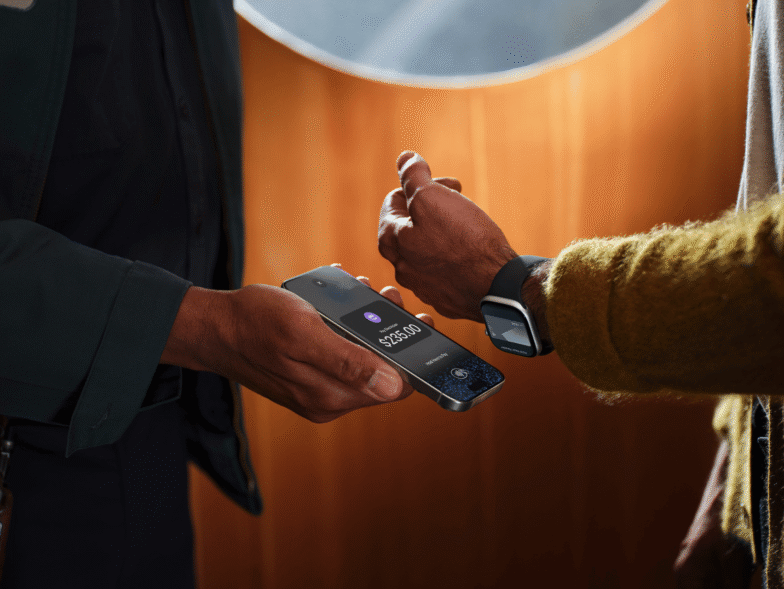
See how tap to pay turns smartphones into secure payment terminals, so growing businesses can accept payments anywhere and get paid faster.
A limo driver finishes a corporate airport run, but their card reader won’t connect. An electrician completes a service call and needs to collect payment before heading to the next job. A fundraiser coordinator is setting up for an event and realizes they forgot their payment terminal.
Things like this happen all the time, which is exactly why tap to pay has become essential for so many businesses. It’s a technology that lets you accept payments from anywhere using just your smartphone. If you need more flexibility in how you take payments, tap to pay changes everything.
Tap to pay is a type of mobile point of sale (mPOS) system. But unlike other mPOS systems that require a card reader or terminal, tap to pay uses your smartphone’s built-in Near Field Communication (NFC) technology.
To accept a payment, you just need to download an app to your phone or tablet. When a customer is ready to pay, they just tap their phone, watch, or credit card to your device. There’s no separate hardware to purchase, charge, or carry around — everything happens on your smart device.
If you’re evaluating payment options, it helps to understand the different choices and what trade-offs you’re making.
Traditional point of sale systems (the kind you see at most retail counters) offer robust features like advanced inventory management and integrated employee scheduling. But these capabilities come with a few challenges.
For instance, with traditional POS terminals:
Using mPOS devices solves the mobility problem, but they still require separate hardware. You have to buy card readers, keep them charged, replace them when they break, etc. For small and medium-sized businesses operating on tight budgets, these costs add up quickly.
Tap to pay takes a different approach entirely. What it lacks in advanced functionality compared to full POS systems, it makes up for in price, speed, ease of use, and flexibility. Tap to pay’s advantage over mPOS tools is that there’s no hardware to purchase or maintain. All employees have to do is download the app on their phones, and they’re ready to go.
Something as easy to use as tap to pay can’t be as safe and secure as a traditional POS system, right? Wrong — and in some ways, it’s actually more secure than traditional card readers.
Every tap to pay transaction is fully Payment Card Industry (PCI) compliant, which means it meets the same strict security standards as any other payment processing method. But what makes it even more secure is that sensitive card data is never stored on your device. When a customer taps their card or phone, the transaction data is encrypted and sent directly to the payment processor. That means you never have to handle or store personal payment information, which reduces your liability and compliance burden.
How professional the experience is matters, too, and the mobile interfaces certainly deliver in this area. Apple’s Tap to Pay on iPhone, for instance, looks sleek and polished, with clear transaction confirmations and professional receipting options. For your customers (especially younger ones), offering tap to pay signals that you’re modern and tech-savvy, not that you’re lacking proper equipment.
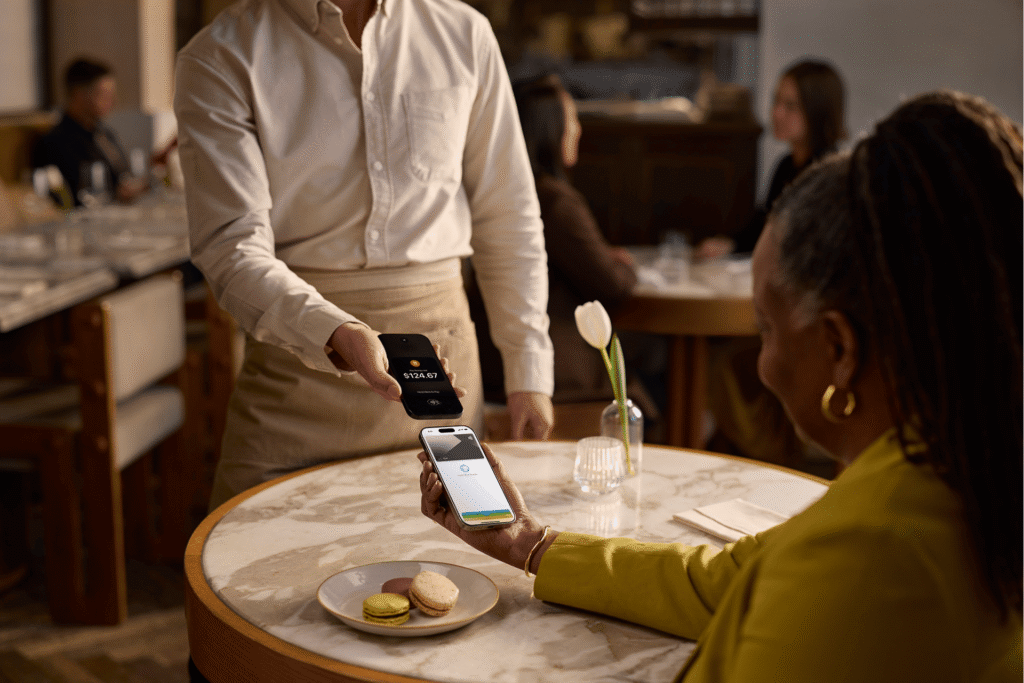
Beyond the obvious convenience of not having extra equipment to cart around, tap to pay offers six practical advantages that help you operate more efficiently and capture more revenue.
With tap to pay, all you need is your phone and cell service. This flexibility is great for those who operate on the go, like luxury transportation services, merchants who travel to craft fairs or pop-up shops, or consultants who provide on-site services.
To get started, download the app and enable tap to pay on your iPhone. That’s it. For new businesses or those testing new sales channels, this removes a major barrier to entry.
With tap to pay, you don’t have to budget for extra payment equipment and ongoing maintenance costs, or worry about upgrading your POS system over time. Everyone already has a phone, so why not take advantage of it?
You don’t need to buy a device for every employee, pass around a shared card reader, or wait for your one knowledgeable employee to check someone out. Anyone can collect a payment at any time.
The convenience of tap to pay is now an expectation — more than 80% of Gen Z and Millennials prefer contactless digital payments and will look to competitors if you don’t offer them.
With tap to pay, you can accept payment at the point of service, instead of sending an invoice when you get back to the office and waiting the typical 30 days to get paid. It’s not only more convenient for your customers, but it also eliminates the need to chase down payments.

While tap to pay can work for almost any business, those in certain industries see the biggest advantages. Here’s where tap to pay tends to have the most immediate impact.
The common thread across these businesses is the need for flexibility without sacrificing professionalism or security. If your business deals with any of these situations — unpredictable locations, tight margins, seasonal fluctuations, or teams that work outside a traditional storefront — tap to pay often makes the most sense.
Flute offers Tap to Pay on iPhone, giving businesses a powerful way to accept enterprise-level payments wherever they operate — without worrying about purchasing expensive equipment or dealing with training and maintenance. It’s the best mPOS option for small and growing teams.
If you’d like to learn about Tap to Pay on iPhone and whether it makes sense for your business, our team can help you understand your options and get started. Get in touch with us to find out more.