

Fraud prevention
Understanding payments
Read more

A great checkout keeps customers coming back. These 10 tips cover the retail checkout best practices that matter most, from flexible payment options to faster, friendlier, more personal service.


You’re third in line at a busy shop, arms full and already running late. You finally reach the counter, tap your phone to pay, and nothing happens. The reader won’t connect. The employee apologizes, restarts the terminal, and asks whether you have another card. The line behind you shuffles. By the time the payment goes through, the small satisfaction of buying something has drained away.
Most people don’t complain when something like this happens, and that’s exactly what makes it dangerous. A frustrating checkout rarely ends in a scene. It ends in a polite smile and a shopper who decides, without saying a word, not to come back.
In a recent survey, we found that 55% of consumers said a single bad payment experience would make them stop or seriously reconsider shopping at a local business. Another 37% have already abandoned a purchase because the payment process felt too confusing or inconvenient.
Whether it’s slow, outdated, or just inconvenient, a bad checkout costs customers. Thankfully, with the right solutions, it’s an easy experience to fix.
For a long time, payments sat in the background; the necessary step at the end of every shopping trip. Today, that dynamic has changed. Shoppers now compare your checkout to every fast, frictionless payment experience they’ve ever had, from the big chain down the street to the coffee app on their phone. When your checkout feels slower or clunkier than they’re used to, they notice.
PYMNTS Intelligence reports that 70% of consumers consider the availability of their preferred payment method very or extremely influential when they decide where to shop. Unfortunately, 39% of Gen Z consumers say physical retail stores haven’t evolved to meet their expectations, and 46% say negative in-store experiences push them to shop online instead.
That means the way you take payments is no longer a back-office detail. It shapes whether a customer completes a purchase, and whether they come back — especially when it comes to younger shoppers. Get the checkout experience right, and it becomes a competitive advantage. Get it wrong, and you lose sales that never show up on a report.
To help you create a smooth, unforgettable experience, we’ve broken down our top 10 checkout best practices, ranging from payment flexibility to staffing to accessibility and everything in between.

Start with the basics: let people pay however they want to. Picture a customer who reaches your counter, realizes their wallet is still in the car, and then pulls out their phone to tap and pay. A few years ago, that was a lost sale. Today it’s a non-issue, as long as your checkout can handle it.
Digital payments aren’t a passing fad — they’re the expectation. The Federal Reserve reports that mobile phones accounted for 32% of all consumer payments in 2024, up from 28% the year before. That number will keep growing as expectations change and younger, more tech-savvy consumers make up a larger portion of your shoppers.
If you want to make sure every customer has a positive experience, your checkout needs to handle the full range of how people pay:
You don’t need to chase every payment trend. You just need to avoid the two sentences no retailer wants to hear at the register: “Oh, you don’t take that? Never mind, then.”
Speed is the part of checkout customers feel most. A terminal that lags, freezes, or drops its connection turns a ten-second sale into a small ordeal, and it does so in front of everyone in line. One retail study found that Gen Z shoppers are the most willing to pay for a better in-store experience, and a faster, easier checkout is one of the improvements they’ll pay more for.
Reliable hardware and a solid internet connection are worth the investment, and so is a backup plan for the moments technology fails. When lines get long during the holidays, a weekend rush, or a sidewalk sale, it’s important to have other options, like hand-held devices, so you don’t have to funnel everyone through one register.
Even the best technology can’t replace a well-staffed, well-trained team. Having enough people on the floor keeps lines short, and shoppers relaxed. Friendly, confident employees make the checkout process feel personal.
Good training pays off in two directions. Knowledgeable staff can suggest genuinely useful add-ons or upgrades at the counter without being pushy. And team members who understand your pricing can answer questions clearly.
For instance, if you use zero-cost processing, like surcharging, dual pricing, or cash discounting, a customer will eventually ask why the card price differs from the cash price. Saying “I’m not sure why the price is different” erodes trust. A calm, clear explanation, on the other hand, keeps the moment smooth.
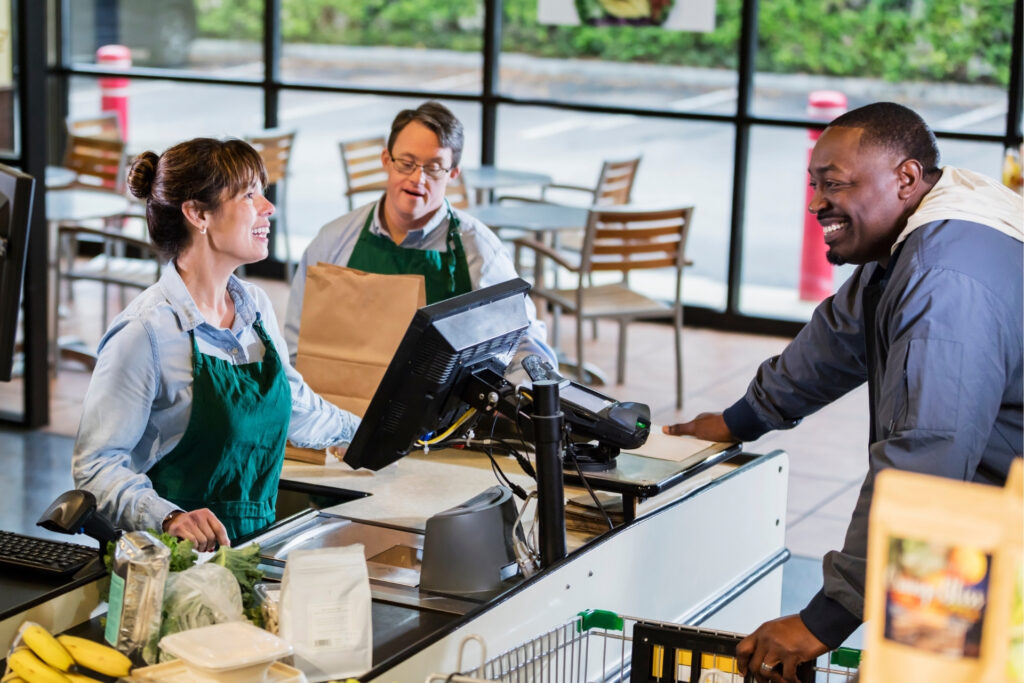
In our consumer survey, 63% of shoppers said checking out at an independent business feels exactly the same as at a large chain, even though many owners believe their experience is more personal. The counter is where a small shop can win, and most of the tools to do it are already sitting in your point of sale (POS) system.
Your POS knows a lot: a customer’s recent purchases, the items they buy again and again, the number where they like their receipt texted, and how close they are to their next reward. Instead of letting that information sit in the background, put it to work.
“Do you want your receipt sent to the usual number?” or “This is your tenth visit; would you like a free coffee?” are simple questions that make shoppers feel seen and valued. That kind of recognition is hard for a big chain to fake, and it’s what turns a one-time buyer into a regular.
Not every customer wants a conversation at checkout, and that’s fine. Self-checkout stations and QR codes give people a fast, independent way to pay on their own terms. A shopper in a hurry can scan and go, or a diner can use a code at the table to settle up without flagging anyone down.
Some customers value the human touch, while others want speed and space. That’s why it’s important to offer these options alongside staffed lanes, not in place of them. A good checkout experience makes room for everyone.
A great checkout works for every customer who reaches the counter, including those who are unintentionally left out of the design conversation. More than one in four U.S. adults live with a disability, so accessibility at the register deserves real attention as a basic part of serving your community.
A few small design choices make a real difference:
Accessibility is only part of serving everyone. Some customers still prefer cash, and forcing a single, digital-only path leaves money on the table. The goal is a checkout that meets people where they are, whoever they are.
Shopping rarely happens in one place anymore. For instance, a customer might browse on their phone at lunch, buy online, and then pick up the item at your store on the way home. Offering that kind of seamless connectivity lets customers buy on their own terms.
But, for any of this to feel seamless, your data has to move as freely as your customers do. Inventory, order history, payment data, and loyalty details should follow the shopper from screen to counter, so a pickup is quick and a return is painless no matter where the sale started.
When your online and in-store systems don’t talk to each other, your customers end up with a frustrating, disjointed experience. Shoppers increasingly expect local stores to offer the same speed and flexibility they get from big chains and online retailers. Connected channels offer a unique way to meet that expectation.

A better checkout experience shouldn’t come at the expense of your margins. Card processing fees eat into every sale, and for growing businesses, those fees add up. Zero-cost payment options like dual pricing, surcharging, and cash discount programs let you offset some of that cost by compliantly passing card fees along to your customers.
When handled well, these programs do more than trim expenses — they reward customers who pay with cash, giving them a small, visible benefit for skipping the card.
Although zero-cost processing is legal in most states (with some exceptions), it’s important to be upfront about your pricing. Post clear signage, show both card and cash prices, follow local rules, and make sure your team can explain everything clearly and confidently. The right payment provider can help you at every step, so you can start cutting card costs with confidence.
Every recommendation here depends on one thing behind the scenes: the payments partner you build on. The best hardware and features don’t help much at 5 p.m. on your busiest Saturday if a terminal goes down and your only options are a chatbot or a ticket that won’t be answered until next week.
For the best results, look for a provider that offers fast, hands-on, U.S.-based support from a real person who can solve the problem while your line is still forming.
A good partner does more than pick up the phone. They’ll go above and beyond to keep your systems and data working together, so everything (flexible payments, personalization, and connected channels) actually holds up in daily use.
When the technology behind your counter is dependable, you can focus on your customers instead of your card reader.
While it’s important to support all of your customers, it’s worth paying close attention to younger shoppers, since they’re the ones setting a standard the rest of the market will follow.
Contrary to what you might think of “digital natives,” young consumers haven’t abandoned physical stores. Nearly two-thirds of Gen Z say they prefer shopping in-store to online. They still want to go out with friends and hunt for that perfect deal; they just want a more modern, effortless checkout when they’re ready to buy.
That generation is far less patient with dated checkout experiences than their older peers. The Federal Reserve found that 18- to 24-year-olds already make 45% of their payments by phone, and 39% of Gen Zers said physical retail hasn’t evolved to meet their changing expectations.
Gen Z’s global spending power is projected to reach $12 trillion by 2030. Businesses that build modern, flexible checkout experiences now are investing in the customers who will define retail for decades, while still welcoming the shoppers who have been loyal all along.
A great checkout rarely announces itself. It shows up as a line that keeps moving, a payment that simply works, a small moment of recognition, and a customer who walks out already planning to come back.
Every best practice we’ve covered, from flexible payments and reliable equipment to well-trained teams, low-touch options, accessibility, connected channels, and fair pricing, all work together to turn checkout into a reason to return. And with younger shoppers setting the pace, the businesses that get it right today are the ones building loyalty for years to come.
That’s exactly what Flute is built for: flexible ways to pay, reliable equipment, zero-cost pricing options, connected tools, and real human support, all managed from one place. If you’re ready to give your customers a checkout experience they’ll come back for, reach out to our team to see how Flute can help.