

Fraud prevention
Understanding payments
Read more

New Flute survey data shows how payment friction drains small business cash flow — from deposit delays to confusing fees — and what operators say would help most.
Payment friction is one of the few business costs that never shows up as a line item. It looks like a deposit that lands two days after payroll was due, an hour lost to reconciling statements, or a processing fee no one can quite explain.
The costs are real. They’re just easy to miss until you add them up.
In our latest report, “The Visibility Problem: What It Costs When Payments Won’t Get Out of the Way,” we surveyed 1,000 U.S. consumers and 210 small-business operators about how payments shape their buying decisions and their businesses. Our first look at the data focused on the checkout experience and what consumers want when they pay.
Now, we’re turning to the other side of the counter: how operators feel about their payment tools, and how those tools affect their time, cash flow, and ability to grow.
Most operators say their setup is fine. The data tells a more complicated story.
Nearly 88% of the operators we surveyed said their payment tools fit their business well, and 51% reported no major challenges. On the surface, it sounds like everything is working. But that picture starts to change when you dig a little deeper:
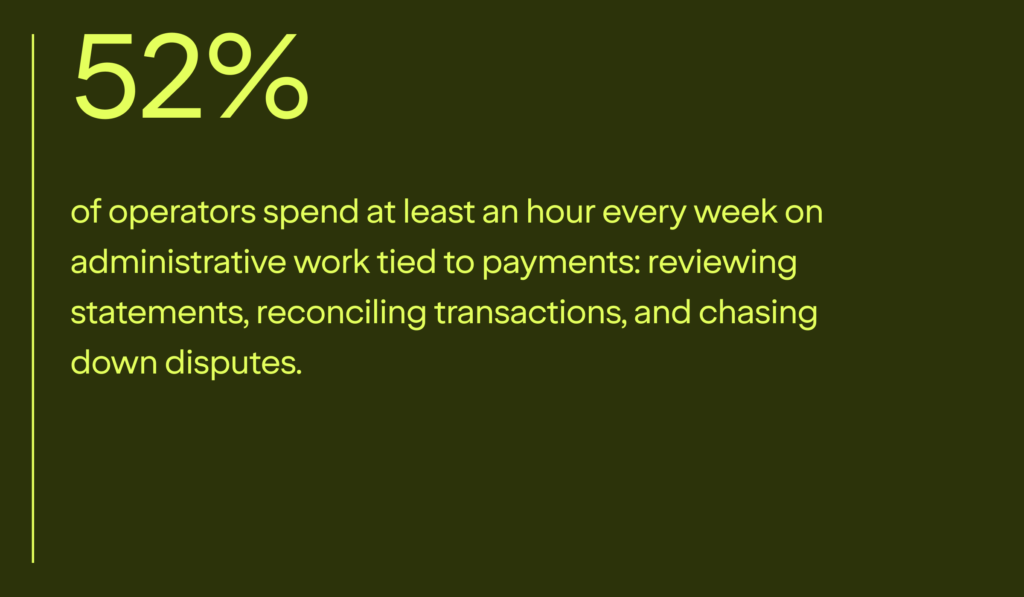
When card sales live in one dashboard, bank details in another, and accounting software in a third, payment reconciliation can become an unnecessary burden.
For small businesses, the work involved in checking for accuracy and making the numbers match doesn’t get handed to a back-office team; it falls to the person already managing customers, inventory, payroll, and growth. Across a full year, one hour of payment admin a week adds up to more than a full workweek of lost time.
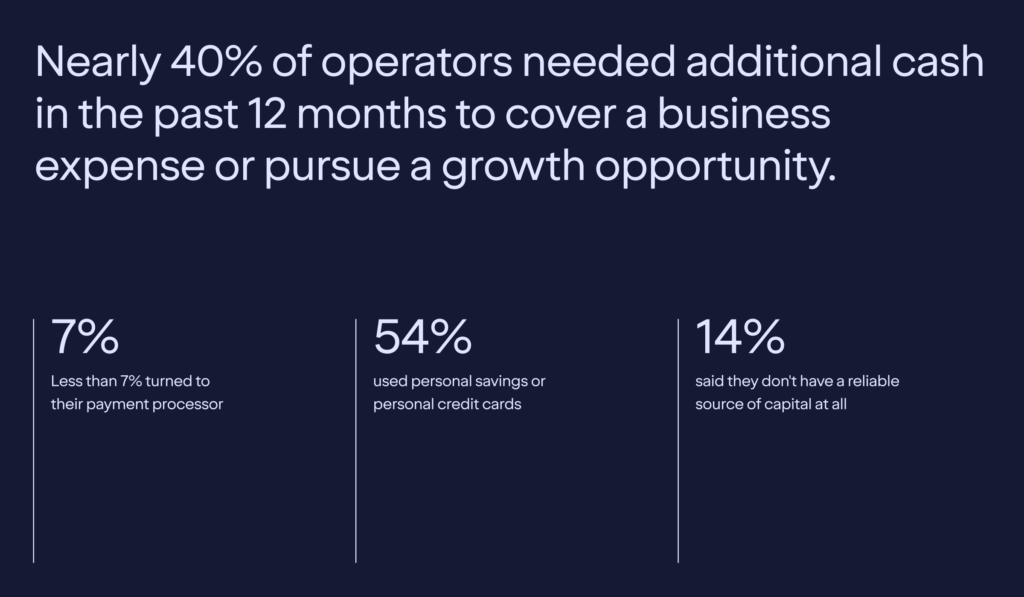
Slow funding creates cash flow problems that can feel impossible to work around. Nearly 40% of operators needed additional cash in the past 12 months to cover a business expense or pursue a growth opportunity. Another 36% said they’ve delayed a business expense like payroll, inventory, or rent in the past year while they waited on deposits to arrive.
The JPMorgan Chase Institute found that the median small business only has 27 buffer days in reserve — less than a month of operating cash. Another study found that nearly half of small businesses feel negative effects within one day of being unable to access their funds.
Consider a boutique that has its best sales day on Saturday. They have a supplier invoice due Monday, and payroll on Tuesday, but their weekend card sales won’t settle until midweek. The invoice won’t wait, and their employees need to be paid on time, so the boutique owner dips into their own savings to cover the difference. In this case, the money exists; the business just can’t access it yet.
Traditional financing isn’t filling the gap, either. In the Federal Reserve’s latest Small Business Credit Survey, only 42% of employer firms that applied for financing received the full amount they applied for, and 22% received nothing at all.
Where operators turn for funds when traditional avenues fall through says a lot about the state of small business funding:
When inventory or payroll goes on a personal credit card, the line between business and personal finances blurs, and the owner ends up carrying weight the business should be able to carry on its own.
The irony is that a payment processor can see a business’s revenue more clearly than almost any lender, yet when cash ran short, fewer than 1 in 14 operators turned to their payment provider for working capital. Until recently, most processors gave them no reason to.
Today, that dynamic is changing, making it easier for operators to access affordable financing and faster payouts through the platform they already use to manage payments.
When we asked which capabilities would make their businesses more profitable or efficient, 37% pointed to same-day or instant payouts. The desire for faster access to earnings won out against everything else we tested, including better analytics, lending, and AI tools.
Pricing came through nearly as loud. Thirty-three percent said better pricing or fee transparency was their top reason to switch processors, ahead of features, hardware, and support. Operators are tired of dealing with hidden fees and confusing, inaccurate data, and are increasingly choosing flexible, transparent processors over outdated legacy providers.
Businesses aren’t asking for much here. They want to focus on growing their business without having to wonder where their money is going, how much they’re paying, or when their earnings will land in their account.
For consumers, payment speed is convenience. For operators, it’s control — over deposit timing, fees, time spent on payment admin, and funding.
If your current setup means weekly reconciliation marathons, days spent waiting for your own money, and cash gaps you have to cover out of pocket, you’re paying a tax that never appears on a statement. Growing businesses deserve better: transparent pricing, funding that moves when the business needs it, and one system for everything.
Download our full report, The Visibility Problem, to see everything the data revealed about payments, cash flow, and the everyday economy.