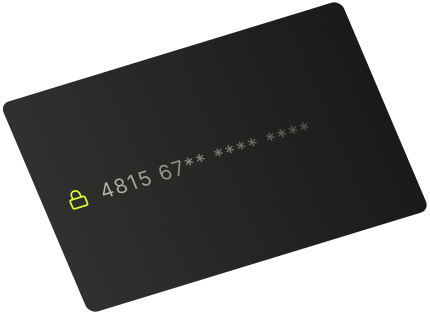

30% less fraud exposure
Network tokens change after each use, making them nearly impossible to compromise.
Flute’s network tokenization reduces fraud, cuts declined payments, and lowers your processing costs. It’s the safest way to process transactions and protect your customers and your business.
Network tokens change after each use, making them nearly impossible to compromise.
Network tokens are issued by the major card brands, resulting in nearly 5% higher authorization rates.
Tokens update automatically when a card is replaced, expired, or reported lost.
Tokenization can reduce interchange rates by up to 10 basis points on qualifying transactions.
“Partnering with Flute has been a wonderful experience. Everyone at Flute has been fabulous to work with — we appreciate the responsiveness and continued support we receive from the entire Flute team.”
Stored tokens update automatically after a card is reissued, keeping recurring billing cycles uninterrupted and cash flow consistent.
Give customers a faster, one-click checkout experience without exposing their actual card data.
Using network-issued tokens instead of raw card numbers reduces your PCI compliance scope.
Card issuers recognize network tokens as more secure, leading to higher approval rates and lower interchange costs.
Network tokens replace actual card data in your environment, reducing the amount of sensitive information you have to handle. That means a lighter PCI compliance burden and lower costs.
Learn moreFlute’s network tokenization runs in the background from day one, so customers can continue entering payment information exactly as they always have.
Learn moreSimple, transparent pricing
Network tokenization pays for itself through better authorization rates, fewer fraud-related chargebacks, and lower interchange rates on qualifying transactions. Talk to our team to see what that looks like for your business.
Network tokenization replaces sensitive card numbers with dynamic tokens generated directly by card networks like Visa and Mastercard. Unlike static tokens created by merchants or processors, network tokens change after each use and update automatically when a card is replaced. This makes them more secure and eliminates payment failures caused by expired or reissued cards.
Standard payment encryption protects card data while it moves between systems, but the actual card number remains unchanged. Network tokens replace that number with a substitute value issued by the card networks themselves, so if it’s ever exposed, it has no usable value outside of the original transaction.
Yes. Network tokenization can lower interchange rates on qualifying transactions. Visa’s network tokens, for example, can reduce interchange by up to 10 basis points. Combined with fewer fraud-related chargebacks and higher authorization rates, the savings add up quickly — especially at scale.
It’s not required, but it’s the most reliable way to handle recurring billing. When a customer’s card is replaced or reissued, the token updates automatically, keeping stored payment information current. Without tokenization, failed charges typically require manual follow-up.
In practice, network tokenization means better authorization rates, less fraud, lower interchange on qualifying transactions, and more reliable recurring billing. Flute’s platform runs everything automatically, with no changes to your checkout or customer experience.
With Flute, you get stronger fraud protection, better authorization rates, and more reliable recurring billing, all without changing how your customers pay. Get started and see the difference from your first transaction.